
1. What Is a Small Telescopic Loader?
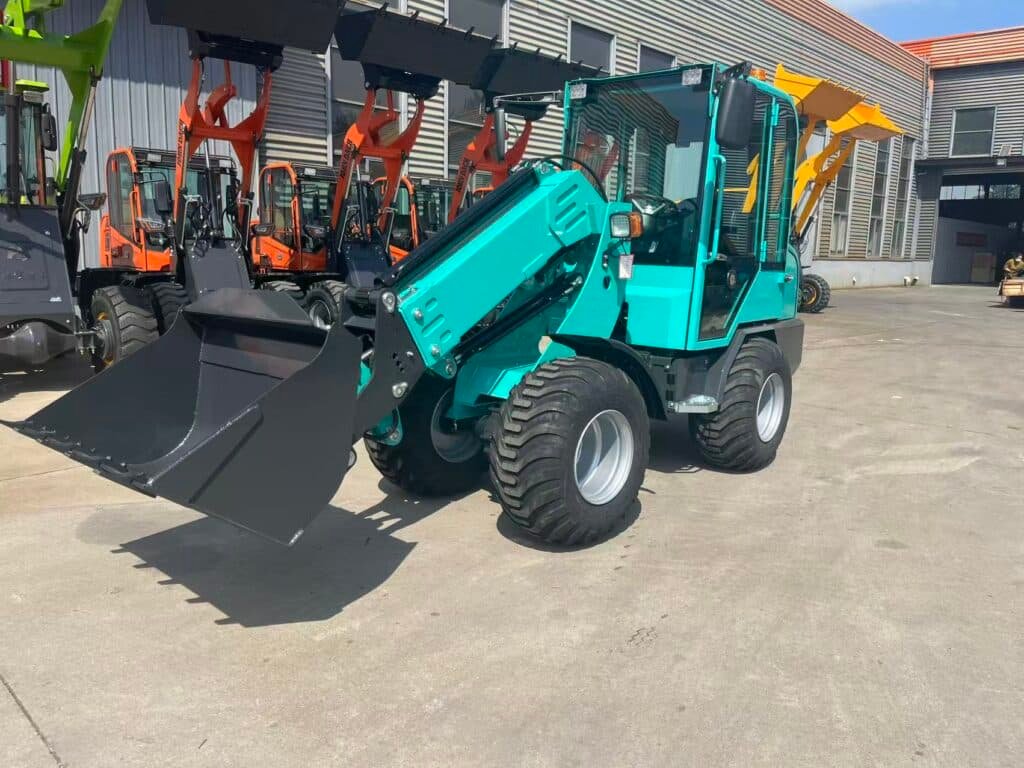
A small telescopic loader (also called a compact telehandler) is basically a compact machine that can lift, carry, and reach forward or upward thanks to its extendable boom.
Think of it like this:
- A forklift can lift — but not reach far.
- A skid steer can move material — but not lift high.
- A telescopic loader can do both.
That’s why farms, construction sites, warehouses, landscaping companies, and rental businesses are adding them into their fleets.
In 2026, compact models between 1–3 tons lifting capacity are the fastest-growing segment in Europe, North America, and Australia.
2. Why More Global Buyers Are Choosing Chinese Models in 2026
Five years ago, many overseas buyers were cautious about Chinese telehandlers.
Today, the situation is very different.
Here’s why:
1️⃣ Stable Quality Has Improved Dramatically
Modern factories now use:
- Robotic welding
- Laser cutting
- CNC machining centers
- 100% hydraulic pressure testing
In many cases, structural weld quality is now very consistent.
2️⃣ Engines and Hydraulic Systems Are More Reliable
Most export models now use:
- EPA / Euro V compliant engines
- International brand hydraulic pumps
- Standardized spare parts
3️⃣ Price Advantage Is Still Strong
Compared to European brands, buyers often save:
- 25%–40% on purchase cost
- 20% on parts
For dealers and distributors, that margin flexibility is very important.
3. 2026 Price Range: What Should You Expect to Pay?
Let’s talk real numbers.
For export-grade small telescopic loaders in 2026:
| Lifting Capacity | Price Range (FOB China) |
|---|---|
| 1 ton | $8,000 – $12,000 |
| 1.5 ton | $11,000 – $16,000 |
| 2 ton | $15,000 – $22,000 |
| 2.5–3 ton | $20,000 – $28,000 |
Prices depend on:
- Engine brand
- Cabin (open or enclosed)
- Air conditioning
- Attachments
- Custom colors / branding
- Emission certification
Be careful: If a supplier’s price is far below market average, usually something is missing — steel thickness, hydraulic quality, or certification.
Cheap upfront often becomes expensive later.
4. Key Specifications That Really Matter
Brochures can look impressive. But smart buyers focus on what affects daily work.
4.1 Rated Lifting Capacity
Check:
- Rated at what boom extension?
- Rated at what lifting height?
Some suppliers quote capacity without full extension. That can be misleading.
4.2 Maximum Lift Height
Common compact models:
- 3.5m
- 4m
- 5m
- 6m
Farm buyers often prefer 4–5 meters.
Construction projects may need 6 meters.
4.3 Operating Weight
Heavier usually means:
- Better stability
- Stronger frame
But also:
- Higher shipping cost
Balance is key.
4.4 Hydraulic Flow
If customers use attachments like:
- Augers
- Sweepers
- Snow blowers
Hydraulic flow must be strong enough.
Low flow = slow performance = unhappy end user.
5. Best Uses: Where Small Telehandlers Make the Most Money
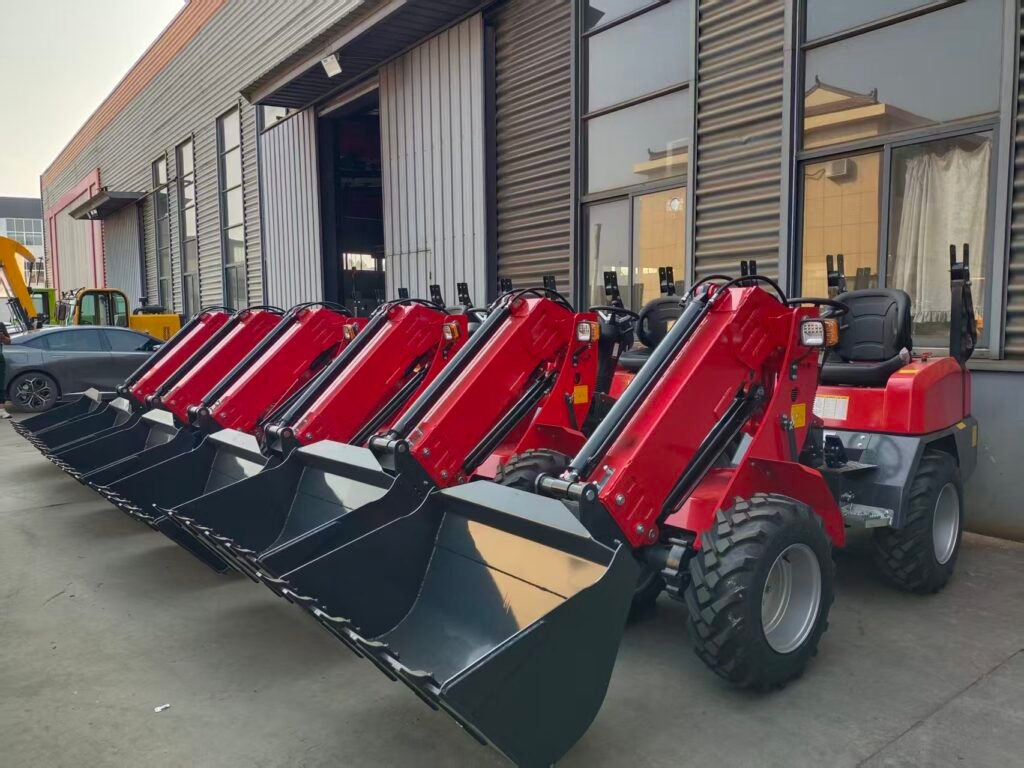
🐄 Agriculture & Farms
- Moving hay bales
- Cleaning barns
- Loading feed
- Stacking pallets
Compact size is perfect for tight farm buildings.
🏗 Small Construction Projects
- Lifting bricks
- Handling cement bags
- Moving steel
- Loading trucks
Especially useful in urban sites with limited space.
🌳 Landscaping & Garden Projects
- Moving soil
- Handling trees
- Carrying stone blocks
Boom reach makes loading trucks easier.
🏢 Rental Business
Compact telehandlers are becoming popular in rental fleets because:
- Easy to operate
- Multi-purpose
- High daily rental rate
6. Diesel vs Electric Small Telescopic Loaders
In 2026, electric models are growing fast in Europe.
Diesel Models
Pros:
- Strong torque
- Good for outdoor use
- Lower purchase price
Cons:
- Emission limits in cities
Electric Models
Pros:
- Quiet
- Zero emissions
- Lower operating cost
Cons:
- Higher initial cost
- Battery replacement cost
For B2B buyers, diesel is still dominant in developing markets.
7. Attachments That Increase ROI
Smart dealers always sell attachments together.
Common profitable attachments:
- Pallet forks
- Bucket
- Bale clamp
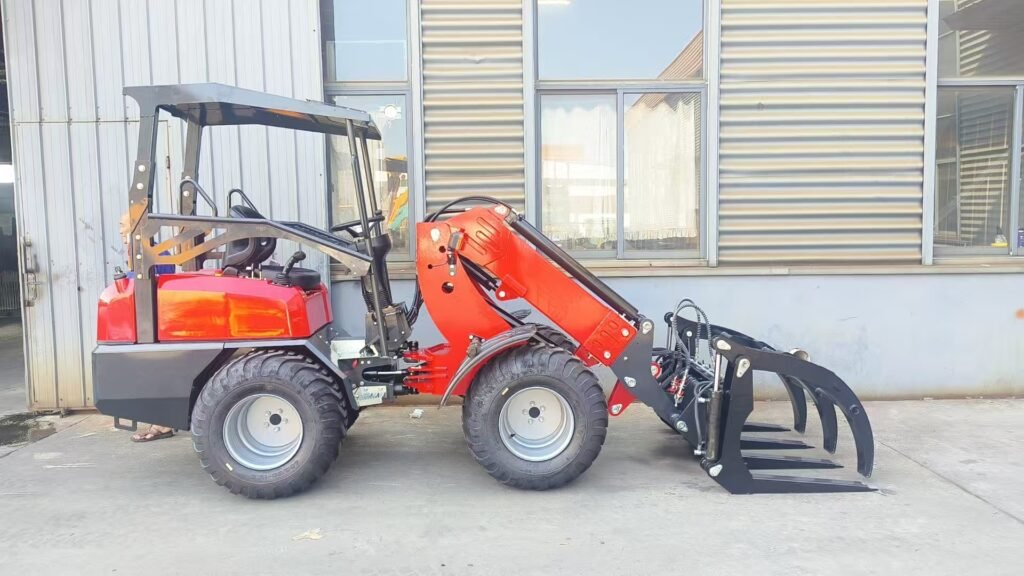
- Grapple
- Snow blade
- Auger
Attachment compatibility is very important.
Quick hitch system should be universal or customized for target market.
8. Common Buying Mistakes (And How to Avoid Them)
❌ Only Comparing Price
Lowest price is rarely best value.
❌ Ignoring After-Sales Support
Ask supplier:
- Spare parts stock?
- Response time?
- Technical support?
❌ No Factory Inspection
Real factories allow:
- Video inspection
- Third-party inspection
- Welding detail checking
Serious suppliers welcome inspection.
9. Quality Control: What a Real Factory Should Show You
In a reliable factory:
- Steel plate thickness is consistent
- Boom welding seams are clean and full
- Hydraulic hoses are properly protected
- Every machine is tested before shipment
For example, in some established factories, each telescopic loader:
- Runs at least 30–60 minutes before leaving workshop
- Undergoes brake test
- Undergoes lifting load test
This reduces warranty claims significantly.
10. Certifications, Shipping & Payment Safety
Certifications
For Europe:
- CE
- Euro V
For North America:
- EPA engine
Always verify authenticity.
Shipping
Most small telescopic loaders:
- 1 unit per 20GP
- 2–3 units per 40HQ
Payment
Common terms:
- 30% deposit
- 70% before shipment
Avoid 100% upfront payment.

11. Why Many Dealers Are Turning to Nicosail
In recent years, many B2B buyers have chosen Nicosail because:
- Genuine factory background
- Experience exporting to Europe, North America, Australia
- Stable quality control
- Custom color & branding support
- Trade show presence
Instead of only selling machines, experienced manufacturers focus on:
- Long-term cooperation
- Clear communication
- Transparent production updates
For distributors who rebrand machines, stable supplier relationship is extremely important.
12. FAQ
Q1: How long does production take?
Usually 15–30 days depending on configuration.
Q2: Can machines be customized?
Yes. Color, logo, cabin type, engine, attachments — all can be customized.
Q3: Are spare parts easy to get?
Reliable factories keep standard parts in stock and provide fast shipping.
Q4: Is a small telescopic loader better than a skid steer?
Depends on use. If lifting height and reach are important, telehandler is better.
Q5: How to avoid certificate fraud?
Ask for:
- Certificate copy
- Engine plate photo
- VIN number
- Third-party verification
Final Thoughts
In 2026, Chinese small telescopic loaders are no longer just “budget alternatives.”
They are becoming serious tools for:
- Farmers
- Contractors
- Rental companies
- Distributors
But smart buying still matters.
Focus on:
- Real lifting capacity
- Hydraulic quality
- Certification authenticity
- Factory transparency
- After-sales support
Choosing the right supplier can mean:
- Fewer warranty claims
- Better market reputation
- Higher resale value
- More profit margin
A well-built compact telescopic loader should work smoothly for years, not just look good in photos.
For buyers who want stable quality, customization flexibility, and long-term cooperation, working with an experienced manufacturer like Nicosail can help reduce risks and improve return on investment.
At the end of the day, the right machine is not the cheapest one — it’s the one that keeps making money without causing problems.
And that’s what every smart buyer really wants.