
1. What a “Small Telescopic Loader” Really Is (and why farms love it)
A Chinese small telescopic loader is usually a compact wheel loader (often articulated) with a telescopic boom. That boom extends forward and upward, so it can stack higher, reach over gates, and place loads deeper into trailers or feed alleys.
In farm language, it’s basically the machine that says:
- “Move this pile,”
- “Pick that bale,”
- “Dump into that mixer,”
- “Stack in that corner,”
- “Clean that barn,”
…and do it without needing a full-size telehandler.
Why it’s becoming popular on farms and in barns
- Lower purchase cost vs. large telehandlers
- More reach than a standard compact wheel loader
- Usually easier on floors than tracked machines (depending on tires and weight)
- Better visibility than many skid steers in forward work
- Quick-attach options make it a year-round tool carrier
This is why farms, dairies, equestrian barns, and small contractors increasingly ask for “small telescopic” machines—especially when they need reach but don’t want a big machine living in the yard.
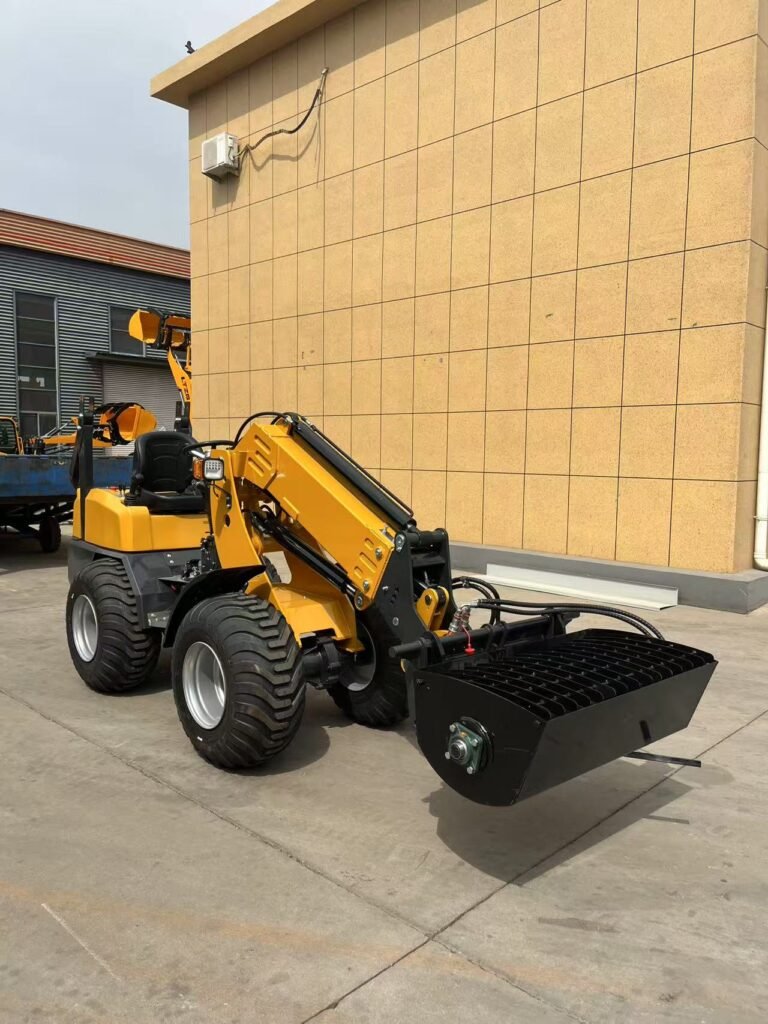
2. Farm & Barn Jobs It Handles Better Than Skid Steers or Tractors
Every machine type can “do the job,” but farms usually buy what reduces stress at 7 a.m. in winter.
Jobs where a compact telescopic loader shines
H3: Bale handling
- Picking and stacking round bales
- Lifting square bale bundles into loft areas or sheds
- Reaching over a fence line without driving through mud
H3: Feeding
- Loading feed mixers
- Moving silage/haylage and placing it cleanly along feed alleys
- Carrying pallets of feed bags (less tearing and dragging)
H3: Bedding and manure
- Bedding distribution with bucket or grab
- Barn cleaning with bucket/fork/manure scraper
- Loading trailers without constant repositioning
H3: Light construction & property work
- Gravel, soil, and material handling
- Light lifting and placing (posts, pallets, small beams)
- Clearing brush with a grapple
If the site is tight and the job needs reach + gentle handling, the telescopic boom becomes the “cheat code.”
3. Attachments That Matter Most (and which ones are often a waste)
Attachments decide whether the loader becomes a daily worker or an occasional toy.
The “Top 7” attachments most farms actually use
H3: 1) General-purpose bucket
The daily driver. Look for:
- Reinforced cutting edge
- Wear strips
- Proper bucket width (wider isn’t always better in tight barns)
H3: 2) Pallet forks
This turns the loader into a moving dock.
- Make sure fork carriage matches the quick-attach standard
- Check fork length vs. barn aisle space (too long becomes annoying)
H3: 3) Bale spear (single or double)
- Round bale spear for heavy, centered loads
- Double spear is more stable for certain bale types
- Check spear frame thickness and weld quality (cheap frames twist)
H3: 4) Bale grapple / silage grab
Great for silage and loose material. Buyer tips:
- Prioritize cylinder protection (barn work hits gates and walls)
- Check hose routing (hoses should not rub during articulation)
H3: 5) Manure fork / grapple fork
Useful when cleaning areas with mixed debris (bedding + manure).
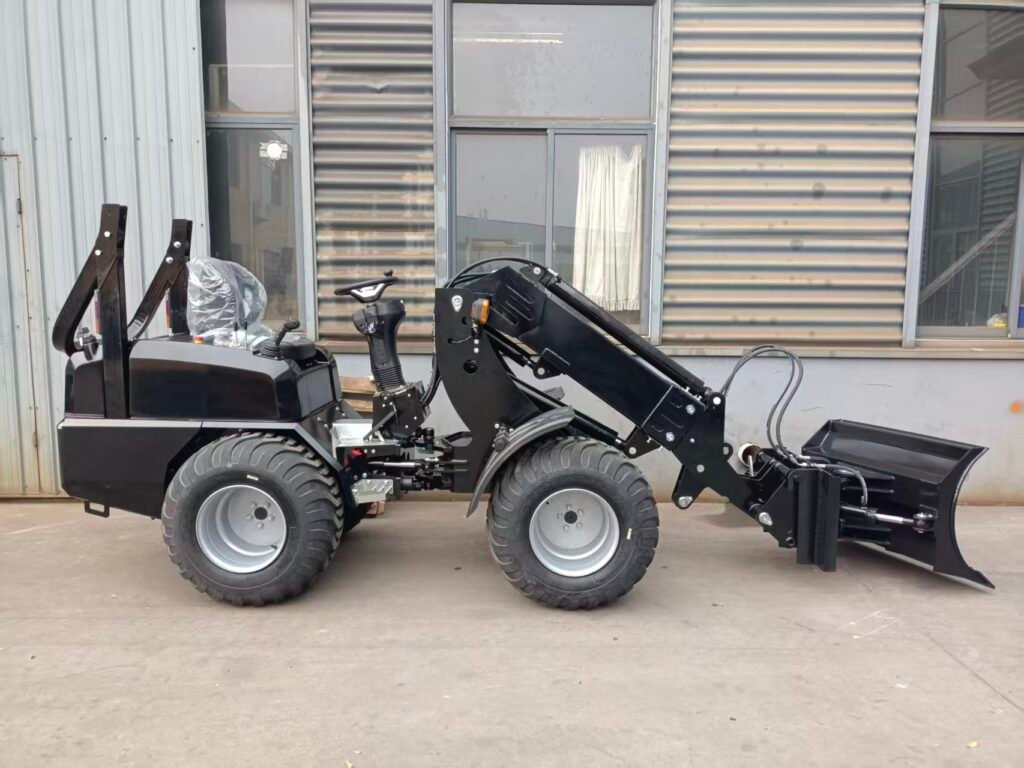
H3: 6) Snow blade or snow pusher
For farms in winter zones, this is pure productivity.
H3: 7) Sweeper (optional, but underrated)
Works well for yard cleanup and barn alley finishing.
Attachments that often disappoint buyers
H3: Oversized buckets
They look impressive, but:
- They overload the machine early
- They reduce stability and increase tire wear
- They force lower travel speed in barns (more bumping and sloshing)
H3: Fancy specialty tools without hydraulic match
Some attachments need:
- Specific hydraulic flow
- Case drain lines
- Special couplers
If the loader and attachment don’t match, it becomes a refund argument.
Quick-attach: the quiet deal-breaker
Before buying any loader, confirm:
- Quick-attach type (e.g., universal skid steer style, Euro-style, proprietary)
- Hydraulic quick couplers (flat-face couplers often reduce leaks and mess)
- Auxiliary hydraulic lines routing and protection
A simple rule: If attachments aren’t easy to swap, people stop swapping. Then productivity drops.
4. Lift Height: How to pick the right number without tipping or breaking things
Lift height is the number that gets advertised the loudest, but it’s also the easiest number to misunderstand.
Step 1: Identify the real job height
Common farm height needs:
- Dumping into a feed mixer
- Loading a trailer
- Stacking bales in a shed
- Reaching over gates or barriers
Instead of chasing maximum height, measure:
- Trailer side height
- Mixer hopper height
- Stack target height
- Any overhead constraints (barn doors, beams, lights)
Step 2: Understand “lift height” vs “dump height”
Many people hear “lift height” and assume it means “dumping height.” Not always.
- Lift height: max pin height or max boom height
- Dump height: the height at which material actually clears when tipping a bucket
- Reach at height: how far forward the load can be placed
For farms, “reach at height” is often more useful than pure height—especially for loading trailers without kissing the side panels.
Step 3: Know what changes when the boom extends
A telescopic boom changes leverage.
- More extension = more forward load moment
- More moment = less safe capacity and more tip risk
- More extension = higher stress on pins, bushings, and boom sections
So the important questions are:
- What is the rated capacity retracted vs extended?
- What is the safe working load at the needed height?
A realistic buying approach:
- Pick a loader that can do the target job without living at full extension all day.
That’s how pins last longer and tires stay happier.
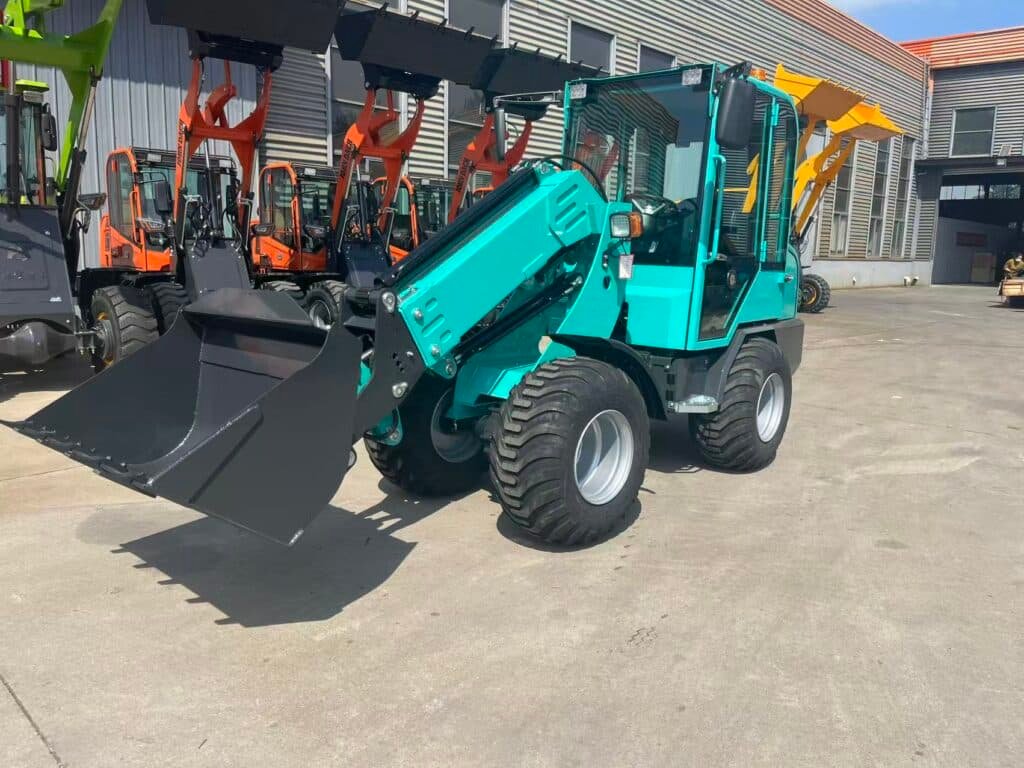
Step 4: Barn reality check: overhead and “oops space”
In barns, it’s not just about lifting high. It’s also about:
- Overhead beams
- Door tracks
- Lighting
- Ventilation ducts
- Low ceilings in older buildings
A loader that can lift higher than needed is fine—as long as it can also work safely at low boom angles without blocking visibility.
5. Maneuverability: What makes one loader “feel small” in a tight barn
In barns, maneuverability is everything. A machine can have great specs and still feel clumsy if the geometry is wrong.
The big maneuverability factors
H3: 1) Overall width
This determines whether it fits:
- Through barn doors
- Between stalls
- Along feed alleys
- Past gate posts
A few centimeters can be the difference between “easy” and “daily scraping the wall.”
H3: 2) Turning radius and articulation
Many compact wheel loaders use articulation (the body bends in the middle). This is why they often turn tighter than tractors with loaders.
Look for:
- Smooth articulation response (not jerky)
- Good steering cylinder protection
- Stable feeling when turning with a raised load
H3: 3) Wheelbase + center of gravity
Short wheelbase:
- Turns tighter
- Can feel bouncy with loads
Longer wheelbase: - More stable
- Needs a bit more space
Barn buyers usually want the best compromise: stable enough for bales, small enough for alleys.
H3: 4) Hydrostatic drive feel
A good hydrostatic setup helps fine control:
- Inch forward slowly
- Stop precisely
- Feather into a pile without spinning tires
Barn work is “precision driving,” not racing.
H3: 5) Visibility
Visibility is a maneuverability feature. If the operator can’t see:
- Fork tips
- Bucket edge
- Right rear corner
…then every move becomes slow and stressful.
6. Stability & Safety: The stuff buyers regret ignoring
Most farm accidents happen during:
- turning with a raised load
- working on uneven ground
- lifting near max extension
- carrying loads too high while traveling
Simple stability rules that protect people and machines
- Travel with loads low
- Avoid sharp turns with a raised boom
- Use proper counterweight design (factory integrated, not home-made blocks)
- Understand the rated load at full extension (usually much lower than retracted)
Ask for these safety basics
- ROPS/FOPS protection (depending on market requirements)
- Seat belt and interlock features
- Clear load charts or capacity guidance
- Emergency stop and safe hydraulic behavior
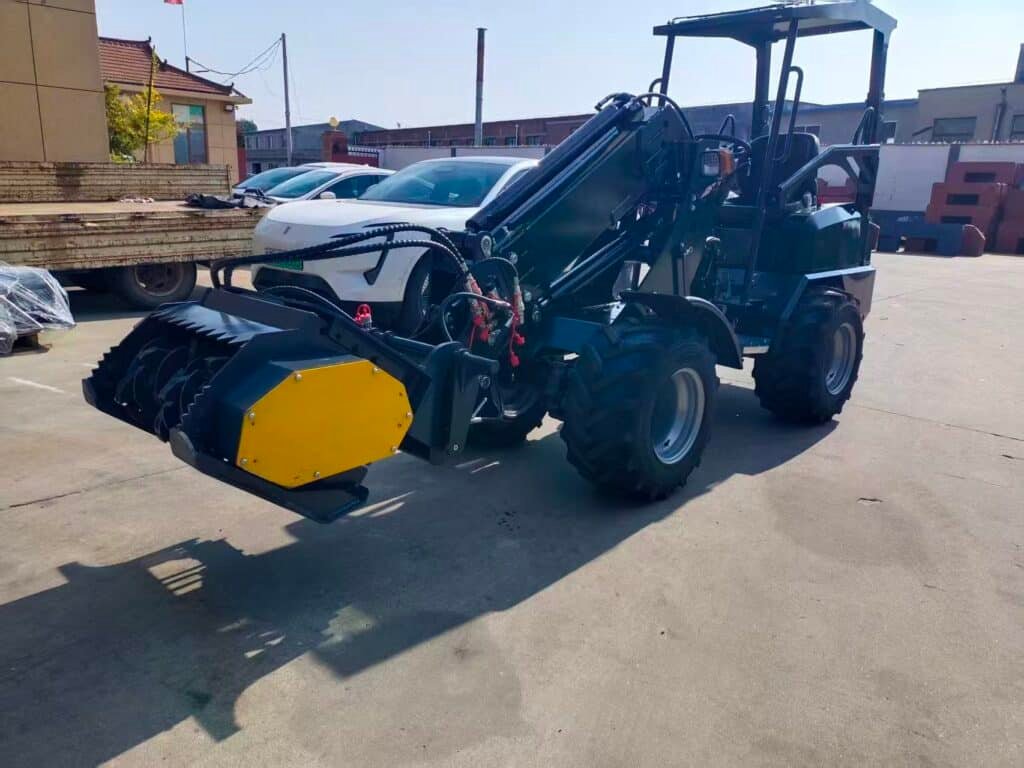
7. Hydraulics: Flow, pressure, hoses, couplers—simple checks that prevent headaches
Hydraulics is where buyers get surprised, especially with attachments.
What farms typically need
- Enough flow for grabs, grapples, sweepers
- Smooth control (not aggressive on/off)
- Reliable couplers that don’t leak constantly
Simple buyer checks
H3: Coupler type
Flat-face couplers can reduce leakage and dirt contamination compared with older styles (especially in dusty barns).
H3: Hose routing
Hoses should be:
- protected from rubbing
- clear of pinch points during articulation and boom extension
- easy to inspect without removing panels
H3: Valve behavior
If possible, confirm the machine can:
- hold the boom without drifting
- operate auxiliary hydraulics without weird surging
- run attachments without overheating quickly
Overheating is often a sign of mismatched hydraulic design, undersized cooling, or poor tuning.
8. Tires, Ground, and Barn Floors: traction without tearing things up
Barn floors and yard surfaces are not forgiving.
Common tire choices
H3: Agricultural tread
- Better in mud
- Can mark softer floors
H3: Industrial tread
- Good all-rounder
- Often kinder on hard surfaces
H3: Solid tires (where available)
- Puncture resistance
- Harsher ride
- Not always ideal on uneven farm ground
Practical farm advice
- For concrete barns, prioritize non-marking behavior and stability
- For muddy yards, prioritize traction and self-cleaning tread
- For mixed use, industrial tread is often the simplest choice
Also consider ground clearance and underbody protection if the machine will work around debris, stones, or frozen manure.
9. Serviceability: daily checks, grease points, and why “easy access” is not marketing fluff
On farms, service happens when it’s fast. If it’s hard, it gets skipped.
What “good service access” looks like
- Daily checks reachable without gymnastics
- Grease points grouped logically
- Filters accessible without removing five covers
- Radiator and cooler cleaning access (barn dust is real)
The reliability reality most buyers learn late
A loader can have good parts, but still fail early if:
- grease points are ignored
- pins run dry
- cooling packs clog
- hydraulic oil gets contaminated
So serviceability is not a luxury—it’s a survival feature.
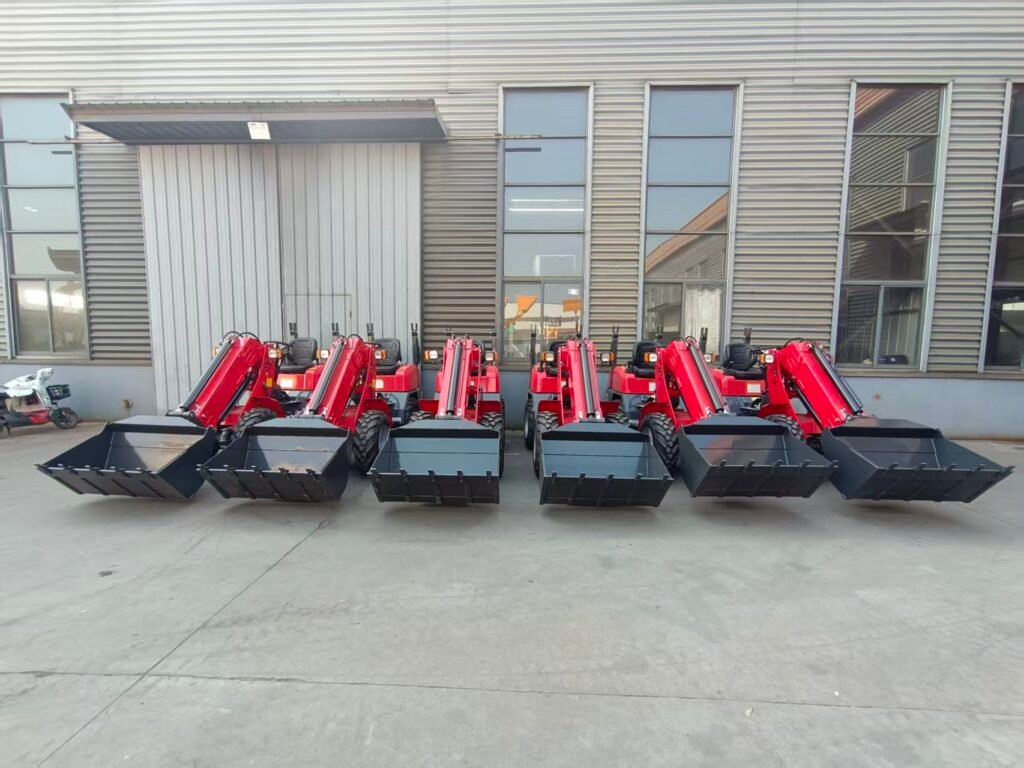
10. Buying from China: quality verification, certification, spares, lead time, shipping
Buying a Chinese small telescopic loader can be a great decision—if verification is done in a practical way.
What experienced buyers verify (without getting “paper-only” proof)
H3: 1) Real factory capability
Look for:
- production lines that show consistent assembly flow
- documented QC checkpoints (not just a stamp)
- clear serial number tracing
- real after-sales parts process
H3: 2) Pre-shipment inspection scope
A useful inspection includes:
- cold start test
- full function test (boom extend/retract, steering, drive)
- hydraulic leak check
- charging system test
- basic safety checks
- attachment interface check (quick-attach fit)
H3: 3) Certificates and compliance
Markets differ, but buyers often care about:
- CE conformity (Europe)
- Engine emissions expectations (varies by country and engine family)
- Noise and safety labeling
The key is to match certification to the destination market and import plan.
H3: 4) Spare parts and wear items
A farm machine needs quick access to:
- filters
- belts
- hoses
- seals
- pins/bushings
- sensors and switches
Ask how spares are stocked and shipped, and whether common parts are standardized.
Where Nicosail fits in
Nicosail focuses on compact construction machines for export markets and typically builds machines with customizable configurations (attachments, couplers, tires, and appearance options) for different farm needs. The practical advantage for farm buyers is not “a logo,” but the ability to order a loader that matches:
- barn width and door height
- attachment plan
- spare parts bundle
- market compliance requirements
…without turning the purchase into a complicated engineering project.
11. A practical selection checklist (fast decision tool)
Use this like a farm-ready worksheet.
A) Size & access
- Will it fit the narrowest door?
- Will it turn in the tightest alley?
- Is visibility good for fork tips and bucket edge?
B) Lift & reach
- What height is truly needed for mixer/trailer/stacking?
- What capacity is available at that height (especially extended)?
- Can the job be done mostly without full extension?
C) Attachments
- Bucket size matched to machine stability
- Forks + bale spear + grab (most common “farm trio”)
- Coupler standard confirmed
- Aux hydraulics matched to the attachment requirements
D) Ground & tires
- Concrete barn vs mud yard vs mixed
- Tire tread chosen for surfaces
- Floor protection considered
E) Service & reliability
- Grease points accessible
- Cooling system easy to clean
- Filters easy to replace
- Spares plan confirmed
F) Buying confidence
- Factory verification process
- Real inspection scope
- Shipping plan + parts delivery plan
- Clear warranty terms
If most boxes are “yes,” the purchase is usually safe.
FAQ
Q1: Is a small telescopic loader better than a skid steer for barns?
Often yes for visibility, reach, and gentler floor behavior—especially if the barn is tight and stacking/loading needs height. But skid steers can win in extremely tight pivot spaces and certain ground conditions.
Q2: What lift height is “enough” for a typical farm?
Enough is the height that clears the mixer or trailer with margin, without running full extension daily. Measuring the real working heights on-site prevents buying the wrong machine.
Q3: Which attachments should be purchased first?
Most farms start with: general bucket + pallet forks + bale spear (or bale grab). Those three cover a huge percentage of daily work.
Q4: What makes one compact telescopic loader more maneuverable than another?
Width, articulation angle, turning radius, wheelbase, hydrostatic control smoothness, and visibility. Specs matter, but geometry and operator feel matter just as much.
Q5: How to avoid tipping risk with a telescopic boom?
Don’t carry loads high, avoid sharp turns with raised loads, and understand capacity differences retracted vs extended. Choose a model that does the job without always maxing out the boom.
Q6: What should be checked before shipping from China?
Cold start, full function testing, leak check, hydraulic behavior, steering and braking, and quick-attach fit. A real inspection beats “paper proof.”
Q7: Are Chinese small telescopic loaders reliable for daily farm use?
They can be, if the factory controls build consistency and the buyer matches the machine to the job (especially attachments, hydraulic requirements, and maintenance access). A spares plan is also important.
Q8: Should a spare parts package be ordered with the machine?
For farm use, yes. Filters, belts, hoses, seals, and common wear items reduce downtime during peak seasons.
Summary
A Chinese small telescopic loader can be a smart farm and barn investment when three things are chosen correctly: attachments, lift height (with real capacity at that height), and maneuverability for tight spaces. The winning approach is simple: measure the real working environment, pick a machine that does the job without constant max extension, prioritize the “farm-essential” attachments, and verify build quality with practical inspections and a spare parts plan. Brands like Nicosail can be a good fit when buyers want export-ready configurations and attachment matching without turning the order into a guessing game.