
1. Why Greenhouses Need a Different Kind of Loader
Greenhouses look simple from the outside, but anyone who has worked inside one knows the truth. Space is tight. Air circulation is limited. The ground is often soft, damp, or paved very lightly. A machine that works perfectly in a yard or open farm can suddenly become a problem inside a greenhouse.
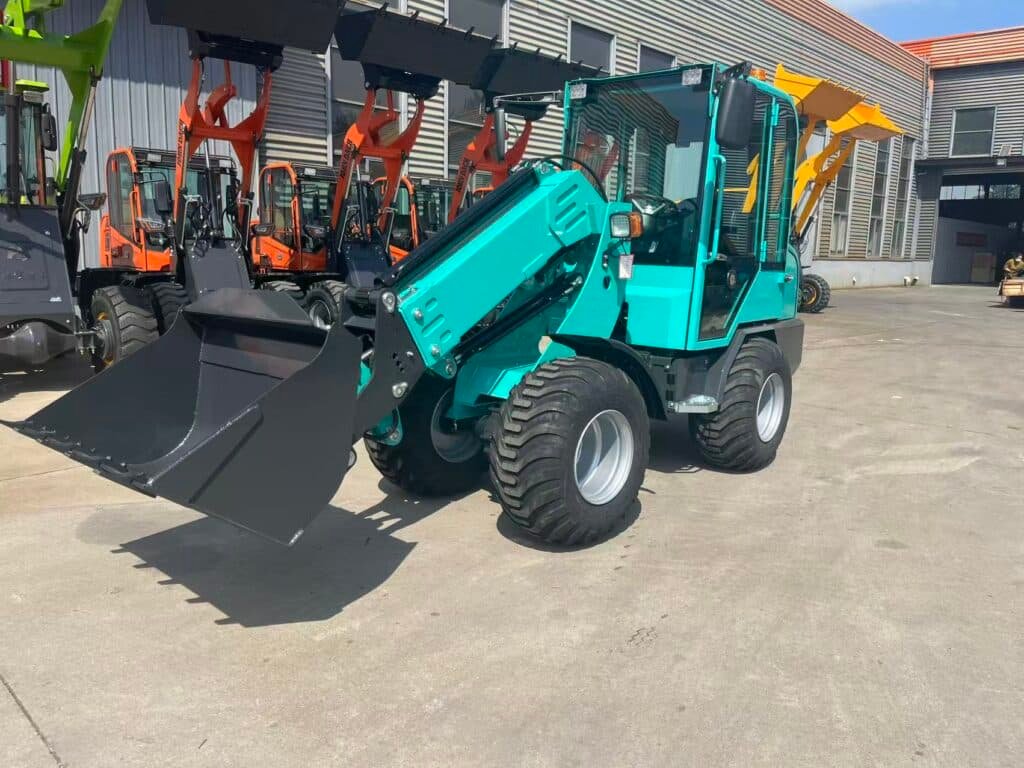
That is why more growers, contractors, and rental companies are now looking at small telescopic loaders instead of skid steers or traditional compact loaders. The telescopic boom gives reach without needing to drive too close, and the compact body helps avoid damaging plants, pipes, and structures.
But not all small telescopic loaders are suitable for greenhouse work. Two issues come up again and again during buyer discussions: height and emissions. Get either one wrong, and the machine becomes a headache instead of a helper.
2. What “Small Telescopic Loader” Really Means in Greenhouse Use
On paper, many machines are labeled “small” or “compact.” In real greenhouse operations, that word means something very specific.
A greenhouse-friendly telescopic loader usually needs:
- Low overall height (often under 2 meters)
- Narrow width to pass between rows
- Smooth, precise control at low speed
- Clean exhaust or very low emissions
- Quiet operation
Many buyers focus too much on lifting capacity and forget that inside a greenhouse, fitting and breathing matter more than raw power.
3. Height Is the First Thing That Can Go Wrong
Overall Machine Height
This is where many buyers make their first mistake. They look at lifting height but forget machine height with the cab or canopy.
In greenhouse work:
- Door height is often limited
- Roof beams, heating pipes, and irrigation lines hang low
- Some greenhouses have uneven floors that reduce clearance further
A difference of just 10–15 cm can decide whether a loader works smoothly or constantly hits obstacles.
Experienced buyers usually ask suppliers for:
- Height with standard tires
- Height with optional low-profile tires
- Height with folding ROPS or canopy
That last point is important. Some Chinese manufacturers offer foldable or low-profile ROPS, which makes a big difference in greenhouses.
Lifting Height vs. Greenhouse Structure
Telescopic loaders are attractive because they lift higher than standard loaders. But inside greenhouses, higher is not always better.
Common greenhouse tasks include:
- Lifting fertilizer bags
- Handling planting trays
- Moving harvested crops
- Loading waste or compost
In many cases, a lifting height of 2.5–3 meters is already enough. Choosing a loader that lifts much higher can:
- Increase machine height
- Raise center of gravity
- Reduce stability in narrow aisles
Smart buyers match lifting height to actual greenhouse shelf and rack height, not to marketing numbers.
Boom Design: Telescopic vs. Fixed
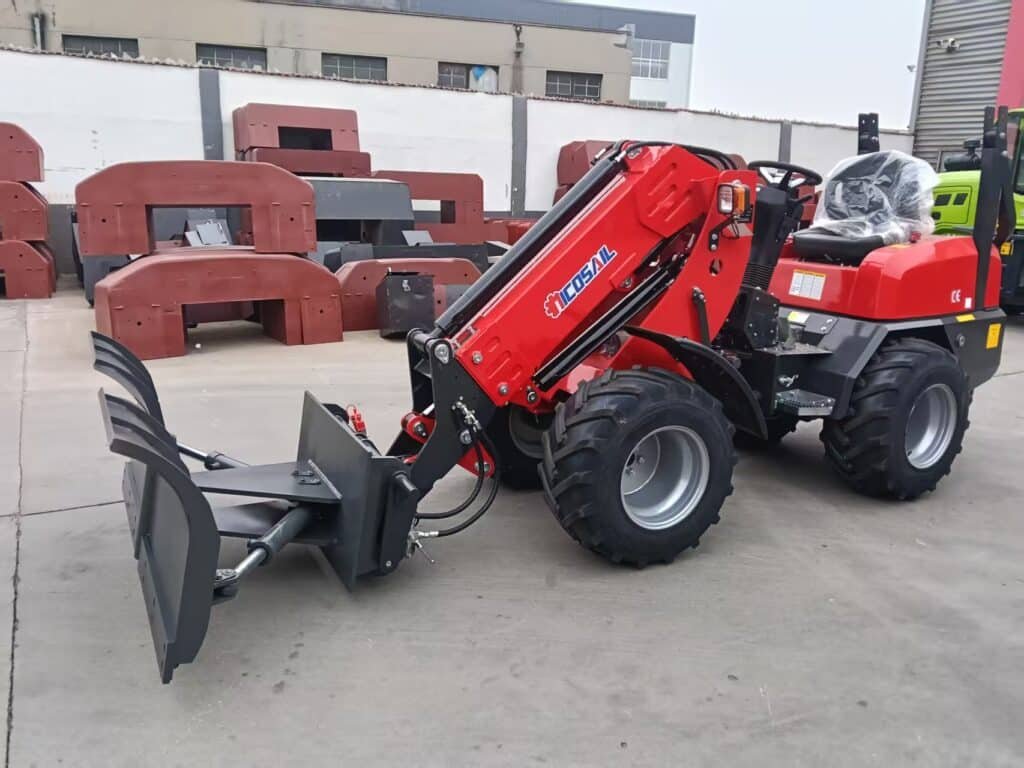
Telescopic booms allow:
- Reaching over plants without driving closer
- Loading trailers parked outside the greenhouse
- Placing materials precisely on racks
But the boom must move smoothly and slowly. Cheap hydraulic tuning can make boom movements jerky, which is dangerous around plants and workers.
Factories with greenhouse experience usually tune hydraulic flow for low-speed precision, not just fast cycle times.
4. Emissions: Why Greenhouses Are Not Like Open Fields
Diesel Fumes in Enclosed Spaces
This is the second big concern. Even a “small” diesel engine can quickly fill a greenhouse with fumes.
Common complaints from end users:
- Headaches after short operating time
- Strong diesel smell trapped under plastic or glass roofs
- Plants showing stress after frequent machine use
This is why emissions matter more inside a greenhouse than in open agriculture.
Engine Standards and What Actually Matters
Buyers often ask only about Tier 4 or Stage V compliance. That’s important, but not the whole story.
Inside greenhouses, what really matters is:
- Engine displacement (smaller often means cleaner in practice)
- Exhaust routing (away from operator and plants)
- After-treatment reliability at low RPM
Some engines meet standards on paper but perform poorly during slow, stop-and-go greenhouse work. Frequent regeneration issues are common in enclosed, low-load environments.
Experienced factories design machines with:
- Engines that tolerate low-load operation
- Simple after-treatment systems
- Stable idle performance
Noise and Heat You Don’t See on the Spec Sheet
Noise and heat are also emissions in a way.
In greenhouses:
- Noise echoes and feels louder
- Heat from the engine raises local temperature
- Operators work close to the machine for long periods
Machines with poor insulation or inefficient cooling can make greenhouse work uncomfortable very quickly.
5. Electric vs. Diesel: What Works in Real Greenhouses
Electric loaders sound perfect for greenhouses, and in some cases, they are.
Electric advantages:
- Zero exhaust emissions
- Very low noise
- Smooth control
Electric limitations:
- Higher purchase price
- Battery replacement cost
- Charging infrastructure required
- Reduced working time in peak seasons
Many greenhouse operators still choose small diesel telescopic loaders with low-emission engines because:
- They work longer without downtime
- Fuel is easy to manage
- Maintenance is familiar
A growing trend is using diesel loaders for heavy work and electric machines for light, frequent tasks.
6. Stability on Narrow Greenhouse Floors
Greenhouse floors are not always solid concrete. Some are:
- Packed soil
- Brick paths
- Plastic-covered ground
A small telescopic loader must have:
- Low center of gravity
- Proper counterweight design
- Smooth tire tread (not aggressive construction tires)
Machines designed for yards or construction sites often feel unstable inside greenhouses. Greenhouse-focused machines usually have:
- Wider stance relative to height
- Softer tire compounds
- Slower boom extension speed
7. Attachments Commonly Used in Greenhouses
A good loader is only as useful as its attachments.
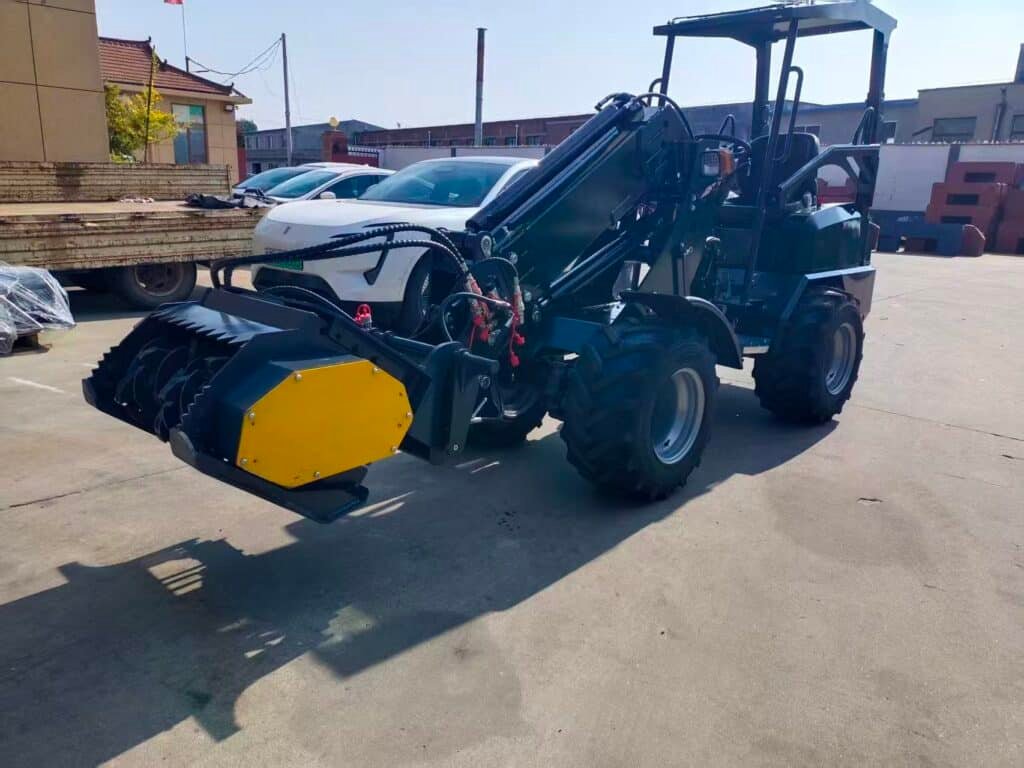
Typical greenhouse attachments include:
- Pallet forks
- Light-duty buckets
- Bale clamps
- Custom tray handlers
Quick couplers save time, but they must be precise and tight. Loose couplers cause shaking, which is bad for delicate plants and racks.
8. Typical Mistakes Buyers Make (and How to Avoid Them)
Mistake 1: Buying based only on lifting capacity
Greenhouse work is about control, not brute force.
Mistake 2: Ignoring real machine height
Always measure door height and internal obstacles.
Mistake 3: Assuming all “Stage V” engines behave the same
Ask how the engine performs at low load.
Mistake 4: Choosing construction tires
They damage floors and reduce stability.
Mistake 5: Skipping operator comfort
Uncomfortable operators make more mistakes.
9. Why Many Buyers Are Turning to Chinese Small Telescopic Loaders
In recent years, Chinese factories have improved a lot in:
- Hydraulic smoothness
- Emission compliance
- Customization options
For greenhouse buyers, customization matters more than brand name. Adjusting:
- Machine height
- Tire type
- Exhaust position
- Hydraulic response
This flexibility is one reason Chinese-made small telescopic loaders are now common in Europe, North America, and Australia.
10. Where Nicosail Fits in
Some factories, such as Nicosail, focus on compact machinery for controlled environments like greenhouses. The approach is practical:
- Keep machines compact and simple
- Focus on stable hydraulics
- Offer customization instead of fixed configurations
For buyers who want fewer surprises during the season, this kind of factory mindset often matters more than flashy brochures.
11. FAQ
Q1: What is the ideal height for a greenhouse telescopic loader?
Most greenhouses work best with machines under 2 meters tall, but it depends on door and internal structure height.
Q2: Is diesel safe to use inside greenhouses?
Yes, if emissions are low, ventilation is adequate, and the engine is suitable for low-load operation.
Q3: Should electric loaders replace diesel completely?
Not yet. Electric is excellent for light tasks, but diesel still offers longer working time and flexibility.
Q4: How important is hydraulic smoothness?
Very important. Jerky movement damages plants and racks and stresses operators.
Q5: Can one loader handle both greenhouse and outdoor work?
Yes, but only if it is stable, compact, and properly configured with the right tires and attachments.
12. Final Summary
Choosing a small telescopic loader for greenhouse operations is not about buying the biggest or strongest machine. It is about fit, air quality, control, and reliability.
Height determines whether the loader can even enter and move safely. Emissions determine whether operators and plants stay healthy. When these two factors are handled correctly, everything else becomes easier.
Chinese small telescopic loaders, when chosen carefully and configured properly, have become a practical and cost-effective solution for modern greenhouse work. Brands like Nicosail show that focusing on real operating conditions—not just specifications—helps buyers avoid mistakes, reduce downtime, and keep greenhouse operations running smoothly.