
A Chinese small telescopic loader can be a very useful machine on construction sites. It can lift, load, carry, stack, reach forward, and work in narrow areas where a larger telehandler or wheel loader may be too heavy or too expensive.
But this type of machine must be selected and used carefully.
Many buyers first look at engine power, bucket size, lifting height, and price. These points are important, but they are not enough. On a real construction site, the most important questions are often different:
Can the machine lift safely when the boom is extended?
Will it stay stable on uneven ground?
Is the rated capacity realistic for daily work?
Are the hydraulic system, frame, axle, tires, and counterweight matched properly?
Can the operator understand the load chart easily?
Will spare parts and after-sales support be available later?
A small telescopic loader is not just a small wheel loader with a longer arm. The telescopic boom changes the balance of the whole machine. When the boom extends forward, the load moves farther away from the machine body. This increases tipping risk. That is why load charts, stability, attachment choice, and operator habits are very important.
For contractors, builders, rental users, farm builders, and small construction teams, this article explains the practical points in simple language. It will help buyers understand what to check before purchasing a Chinese small telescopic loader and how to use it more safely on site.
Nicosail supplies compact construction machinery from China for different working conditions, including machines that need appearance customization, export packaging, and practical after-sales support. But no matter which supplier a buyer chooses, the same basic rule applies: safe lifting depends on the right machine, the right load, the right ground, and the right operator behavior.
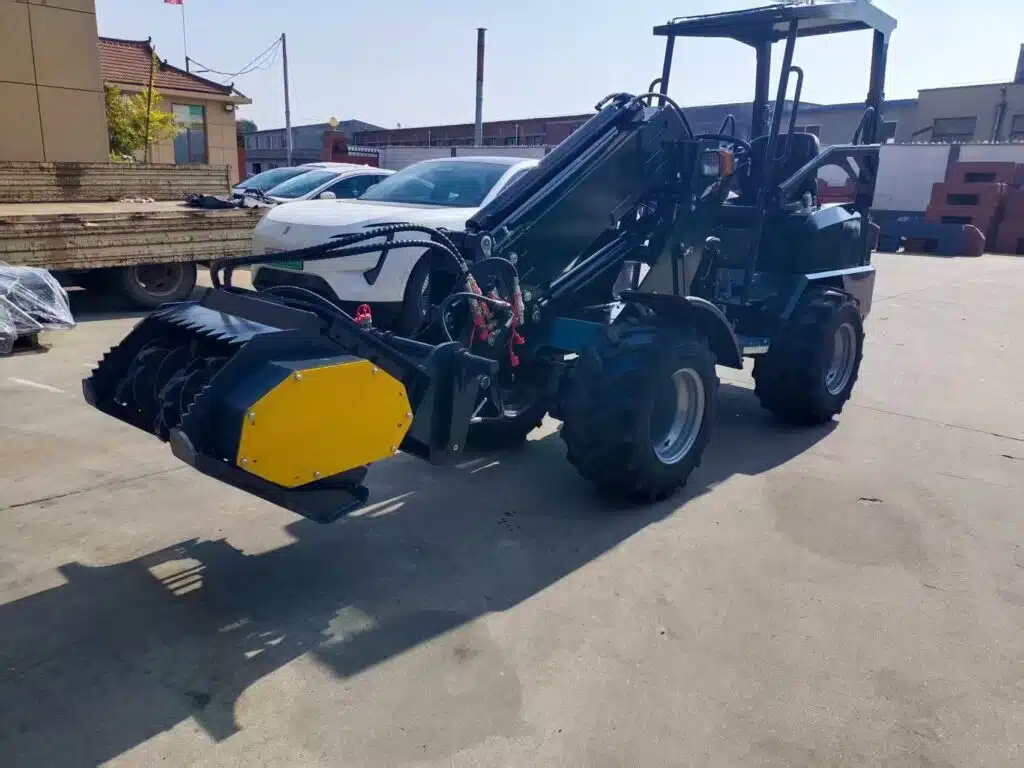
Why Small Telescopic Loaders Are Useful on Construction Sites
Construction sites are not always open and flat. Many jobs happen in tight yards, between buildings, inside farm construction areas, beside fences, near material piles, or around unfinished roads. A large machine may not enter easily. Manual labor is slow and costly. A forklift may not work well on rough ground. A normal wheel loader may not reach high enough or far enough.
This is where a small telescopic loader becomes useful.
It can handle many light and medium-duty jobs, such as moving pallets, loading sand, carrying blocks, feeding mixers, lifting roof materials, transporting bags, cleaning debris, or placing materials over low obstacles.
The main advantage is reach. The telescopic boom allows the machine to lift forward and upward. This gives the operator more flexibility than a normal compact loader.
For small contractors, one machine can often replace several basic handling tools. It may not replace a large telehandler, a crane, or a heavy loader, but it can reduce manual movement and improve jobsite efficiency.
However, this flexibility also brings responsibility. The operator must understand that lifting capacity changes when the boom moves. A machine that can lift a certain load close to the body may not lift the same load when the boom is fully extended.
What Makes a Small Telescopic Loader Different from a Normal Loader
A normal compact wheel loader usually lifts close to the front axle. The bucket or fork is near the machine body. The load center is short. Stability is easier to understand.
A telescopic loader is different because the boom can extend. When the boom extends, the load moves farther forward. This creates a longer lever.
A simple way to understand it:
A 500 kg load close to the machine may feel manageable.
The same 500 kg load far in front of the machine can create much more tipping force.
This is the basic principle behind load charts. The machine does not have one fixed lifting capacity for all positions. Capacity changes according to boom height, boom angle, boom extension, attachment type, load center, tire condition, ground slope, and machine configuration.
This is why buyers should be careful when comparing brochures. One supplier may show maximum lifting capacity. Another may show rated capacity at a certain boom position. Another may show tipping load. These numbers are not always equal.
A serious buyer should ask: “At what boom height and extension is this capacity measured?”
That one question can prevent many wrong purchases.
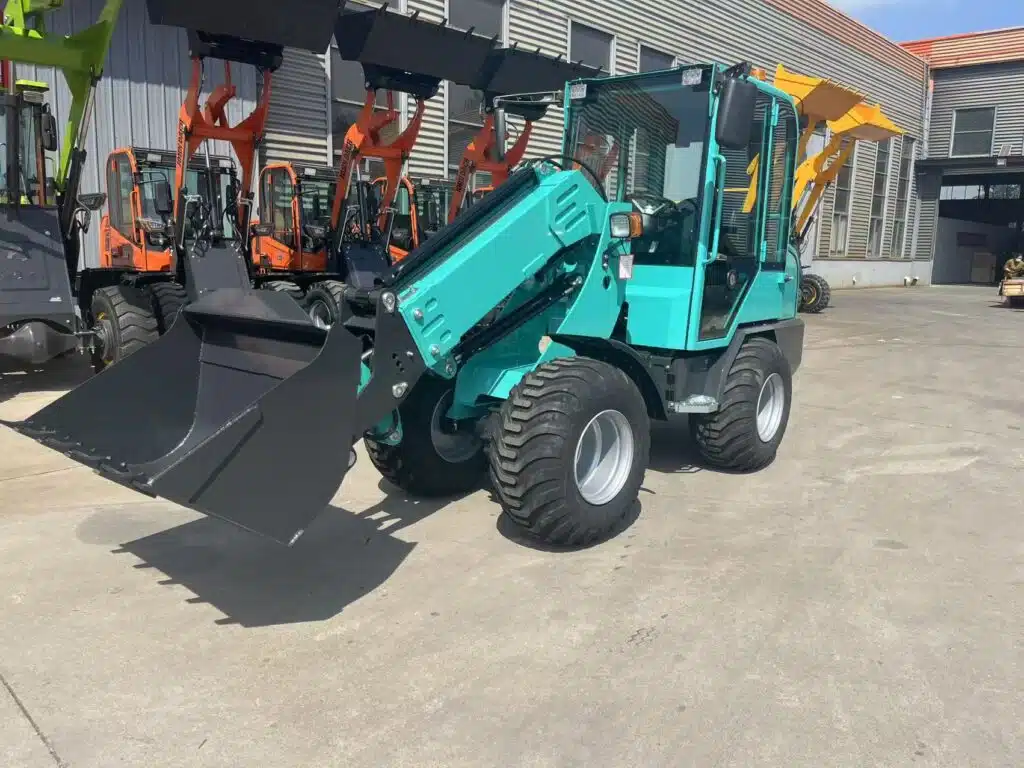
Understanding Load Charts in Simple Words
A load chart tells the operator how much weight the machine can lift safely at different boom positions.
It is not just a technical drawing. It is a safety map.
For a small telescopic loader, the load chart usually shows lifting capacity according to boom height and reach. The closer the load is to the machine, the higher the safe capacity. The farther the boom extends, the lower the safe capacity becomes.
Rated Capacity
Rated capacity is the weight the machine is designed to lift safely under defined conditions. It is usually lower than the tipping load. This gives a safety margin.
Buyers should not treat rated capacity as a number that applies everywhere. A loader may have a rated capacity at low boom height and short reach, but the safe capacity can drop when the boom is raised or extended.
Tipping Load
Tipping load means the load at which the machine begins to lose stability under test conditions. It is not the working capacity buyers should use every day.
If a supplier only talks about tipping load and not rated load, the buyer should ask more questions. Construction site work needs practical safe capacity, not just the biggest number.
Load Center
Load center means the distance from the fork face or attachment point to the center of the load. A pallet of bricks with weight close to the forks is different from a long pipe bundle with weight farther forward.
Longer loads increase forward tipping force. This is why the same weight can feel very different depending on shape and position.
Boom Extension
Boom extension is one of the most important parts of the load chart. As the boom extends, safe capacity drops.
Many accidents happen because the operator lifts a load safely near the machine, then extends the boom forward without realizing that the safe capacity has changed.
Boom Height
Raising the boom changes the machine’s center of gravity. A high load can make the machine less stable, especially when turning, braking, driving on uneven ground, or working on a slope.
The safest habit is to travel with the load low and only raise it when reaching the unloading or placing area.
Why Stability Matters More Than Maximum Lifting Capacity
Many buyers focus on maximum lifting capacity because it is easy to compare. But in real construction work, stability is often more important.
A machine with a strong hydraulic cylinder may be able to raise a heavy load, but that does not mean the machine is stable. Hydraulic power and machine stability are two different things.
A dangerous machine is not always weak. Sometimes the hydraulic system is strong enough to lift more than the chassis can safely support. This can give the operator false confidence.
Good design must balance several things:
Engine power
Hydraulic flow
Axle strength
Frame structure
Counterweight
Wheelbase
Track width
Tire size
Boom length
Attachment weight
Brake performance
If these parts are not matched properly, the machine may look powerful on paper but feel unsafe in real work.
This is part of “invisible reliability.” Buyers cannot see it only from paint, photos, or a short video. It is hidden inside welding consistency, frame design, hydraulic matching, axle selection, hose layout, boom structure, and quality control.
For construction sites, invisible reliability means the machine does not only work on the first day. It keeps working after vibration, dust, mud, repeated lifting, and daily operator use.
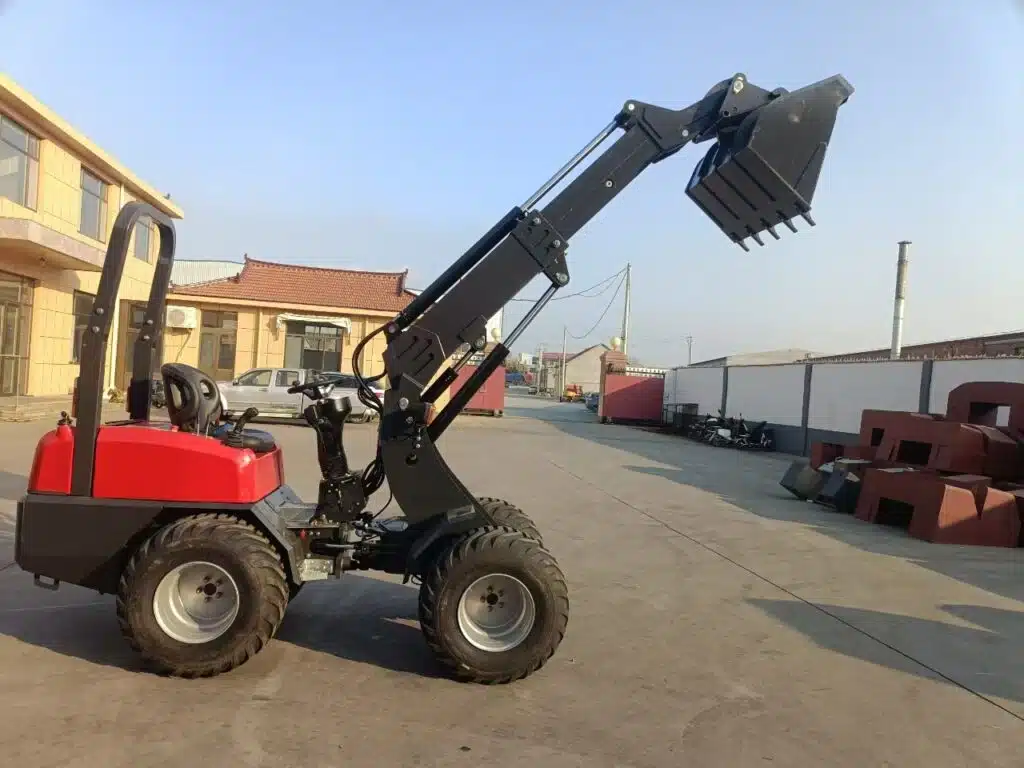
Key Factors That Affect Loader Stability
1. Ground Condition
A small telescopic loader works best on firm, level ground. Soft soil, loose gravel, mud, broken concrete, and slopes all reduce stability.
Even a correct load chart assumes stable working conditions. If the machine is on weak ground, the safe load should be reduced.
Operators should avoid lifting heavy loads on ground that may sink under one wheel. If one side of the machine drops suddenly, the load can swing or shift.
2. Tire Pressure and Tire Type
Tires support the machine and affect balance. Low tire pressure can make the loader lean. Wrong tire type can reduce traction. Damaged tires can create unsafe movement.
For construction sites, buyers should consider tire durability, tread pattern, and ground conditions. A machine used mainly on hard concrete may need different tires from one used in muddy rural building sites.
3. Counterweight
Counterweight helps balance the machine. But more counterweight is not always a simple solution. It can increase stress on axles, tires, frame, and steering parts.
A proper small telescopic loader should have a counterweight matched to its boom, hydraulic system, and rated load. Buyers should avoid suppliers who increase counterweight only to make lifting videos look stronger.
4. Wheelbase and Track Width
A longer wheelbase and wider track can improve stability, but they may reduce maneuverability. A very compact machine can enter tight areas, but it may have lower stability at long reach.
Buyers should choose based on jobsite reality. For narrow building areas, compact size matters. For frequent pallet lifting at height, stability and reach may matter more.
5. Attachment Weight
Attachments are often ignored during capacity discussions. A fork frame, bucket, grapple, or jib adds weight in front of the machine.
The heavier the attachment, the less load capacity remains for the actual material.
For example, a heavy bucket may reduce useful lifting capacity compared with a lighter pallet fork. A long jib may greatly reduce safe lifting weight because it moves the load farther forward.
6. Load Shape
A compact pallet is easier to handle than a long bundle of steel pipe. A bag of sand may shift. A suspended load may swing. A loose bucket load may change during travel.
The operator should understand the load, not just the weight.
7. Driving Speed and Turning
Many tipping problems happen while moving, not while standing still. Turning sharply with a raised load is risky. Braking suddenly can shift weight forward. Driving across a slope can create side tipping risk.
The safe rule is simple: keep the load low, drive slowly, turn gently, and avoid side slopes.
Common Construction Site Jobs for Small Telescopic Loaders
Moving Pallets
Pallet forks are one of the most useful attachments. A small telescopic loader can move cement, blocks, bricks, tiles, insulation boards, and packaged materials.
Buyers should check fork capacity, fork length, carriage strength, and visibility from the cab or operator platform.
Loading Loose Materials
With a bucket, the machine can load soil, sand, gravel, debris, and light aggregates. For heavy wet materials, bucket size should be chosen carefully. A large bucket full of wet sand may exceed safe working load.
Bigger bucket capacity is not always better. A bucket matched to machine stability is safer and more productive.
Site Cleaning
Small telescopic loaders are useful for cleaning debris and moving waste materials. For this work, durability matters. The machine may face dust, sharp objects, vibration, and frequent direction changes.
Feeding Mixers or Hoppers
The telescopic boom can help load materials into mixers, small hoppers, or containers. Buyers should check dumping height and forward reach, not just maximum lifting height.
Light Lifting and Placing
With the right attachment and safe working method, the loader can place materials at height. But it should not be treated like a crane unless the manufacturer allows that use and the correct lifting attachment, load chart, and site safety method are followed.
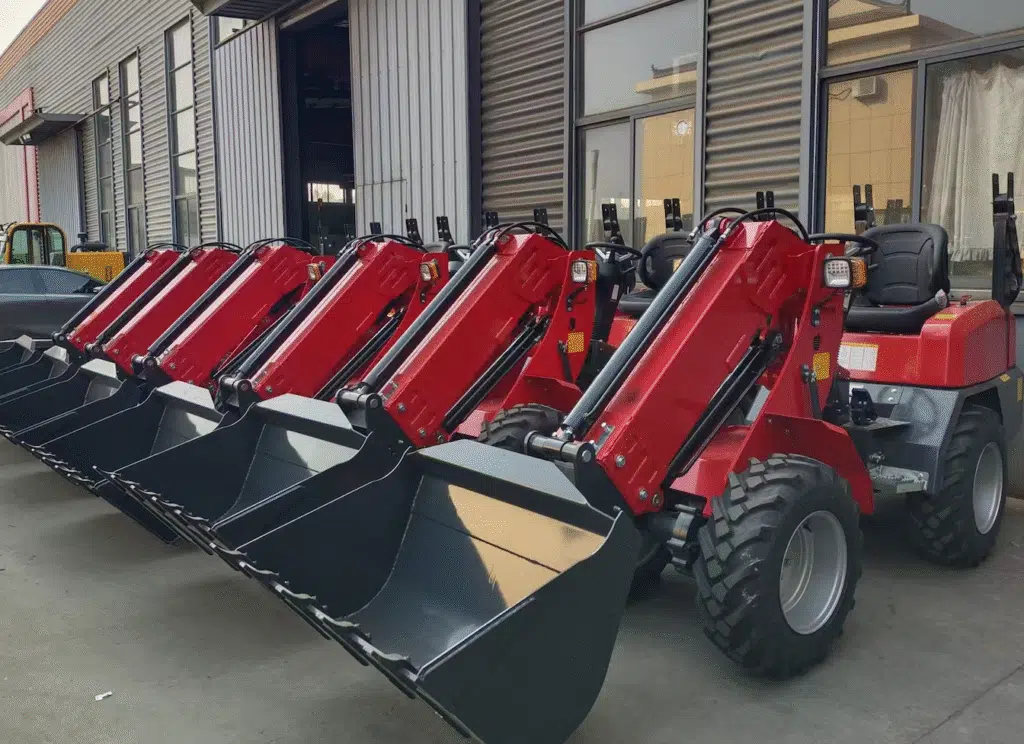
Attachment Choices and Their Effect on Safety
Attachments make a small telescopic loader more useful, but they also change machine behavior.
Pallet Forks
Pallet forks are common for construction materials. They are good for packaged loads, but the operator must keep the load against the fork backrest. If the load sits too far forward, stability decreases.
Buckets
Buckets are useful for loose materials. Buyers should match bucket width and volume to the machine. A very large bucket may look attractive, but it can overload the loader when filled with dense material.
Grapples
Grapples help handle brush, waste, timber, and irregular materials. But irregular loads can shift suddenly. Hydraulic hoses and couplers should be protected because construction debris can damage exposed parts.
Jib Booms
A jib increases reach but reduces safe lifting capacity. It should be used carefully. Suspended loads can swing, especially when driving or turning. Operators should move slowly and avoid sudden movement.
Snow Blades, Sweepers, and Other Tools
These tools may be useful for site maintenance. Buyers should check hydraulic flow requirements, mounting compatibility, and whether the attachment weight is suitable for the loader.
Common Mistakes Buyers Make
Mistake 1: Comparing Only the Maximum Capacity
Maximum lifting capacity is only one part of the story. Buyers should compare capacity at different boom positions.
A better question is: “What can the machine safely lift at the reach and height needed for daily work?”
Mistake 2: Ignoring the Load Chart
Some buyers purchase the machine first and study the load chart later. This is risky. The load chart should be part of the purchase decision.
Before buying, the buyer should list common materials, pallet weights, lifting height, and required reach. Then the supplier can help match the machine.
Mistake 3: Choosing Too Small a Machine
A compact size is useful, but a machine that is too small may always work near its limit. This can increase wear and reduce safety margin.
For daily construction use, it is better to choose a machine with some reserve capacity.
Mistake 4: Choosing Too Large a Machine
A machine that is too large may not enter the site, may damage surfaces, may cost more to ship, and may be harder for inexperienced operators.
Right size is better than biggest size.
Mistake 5: Buying Based Only on Video
A lifting video can be helpful, but it does not replace technical data. Videos may show ideal ground, short reach, special counterweight, or light-duty conditions.
Buyers should ask for rated load, load chart, machine weight, boom dimensions, hydraulic configuration, axle details, tire specification, and attachment weight.
Mistake 6: Ignoring Parts and Service
A low purchase price can become expensive if parts are difficult to find. Construction machinery needs filters, hoses, seals, pins, bushings, cylinders, switches, tires, and electrical parts over time.
A good supplier should explain parts availability before the sale.
How to Choose the Right Chinese Small Telescopic Loader
Step 1: Define the Real Job
Before choosing a model, the buyer should write down the main jobs:
What materials will be lifted?
What is the usual weight?
What is the maximum pallet weight?
How high must the machine lift?
How far forward must it reach?
Will it work indoors, outdoors, or both?
Is the ground concrete, gravel, soil, or mud?
How narrow are the working areas?
Will the machine be transported often?
These answers are more useful than simply asking for “the best model.”
Step 2: Match Capacity to Daily Work
The machine should not work at its maximum limit every day. If the normal pallet weight is close to the machine’s safe capacity at required reach, the buyer should consider a larger model or change the working method.
For rental companies and contractors, reserve capacity is important because different operators may use the machine in different ways.
Step 3: Check Lifting Height and Forward Reach Together
Maximum lifting height alone is not enough. The buyer should also check forward reach at that height.
For example, placing material over a wall or into a truck may require both height and reach. A machine that lifts high but cannot reach forward enough may not solve the job.
Step 4: Choose the Right Attachment Package
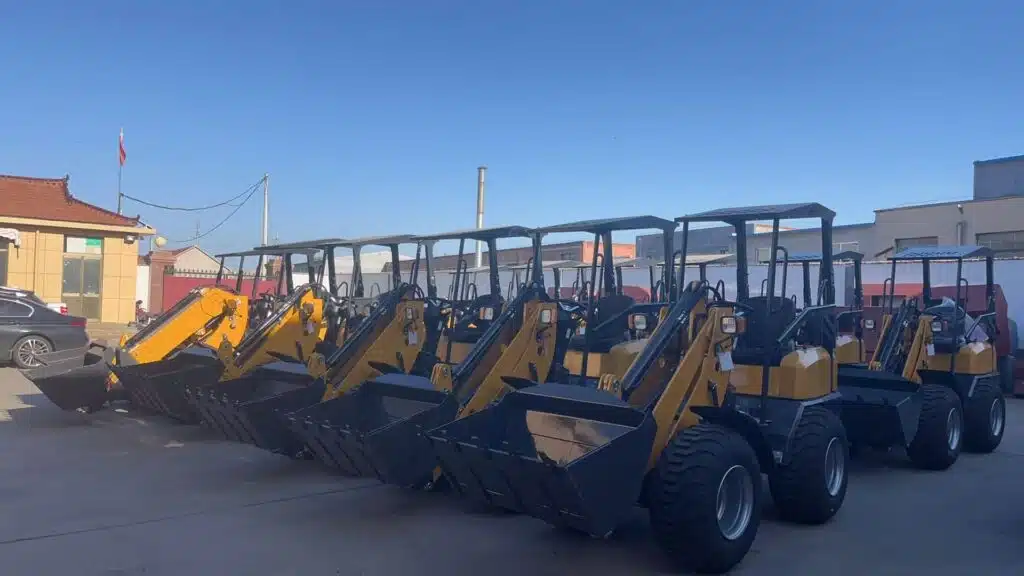
Attachments should match the work. For construction sites, a common package may include a bucket and pallet forks. Other tools can be added based on need.
Buyers should avoid ordering many attachments without checking real use. Unused attachments take space, increase shipping cost, and may not fit the job.
Step 5: Consider Operator Comfort and Visibility
A compact telescopic loader should be easy to control. Good visibility helps safety when lifting pallets, working near workers, or moving in tight areas.
Buyers should check seat position, control layout, mirrors, lights, boom visibility, and access for daily inspection.
Step 6: Check Transport Size and Weight
Many construction buyers need to move the machine between sites. Machine weight, width, height, and trailer compatibility should be checked before purchase.
A machine that is difficult to transport may reduce flexibility.
What to Check Before Buying from a Supplier
Load Chart and Technical Data
A serious supplier should be able to provide basic technical details clearly. Buyers should ask for:
Rated load
Maximum lifting height
Forward reach
Machine weight
Load chart
Engine model
Hydraulic system information
Tire size
Attachment weight
Overall dimensions
Shipping dimensions
If answers are unclear, the buyer should slow down.
Build Consistency
For imported construction machinery, consistency matters. One good sample is not enough. Buyers need stable welding, stable assembly, stable hydraulic routing, stable electrical layout, and repeatable inspection.
This is especially important for dealers and rental fleets, but also matters for individual contractors.
Nicosail focuses on practical factory support for buyers who care about machine matching, appearance customization, export preparation, and communication before shipment. For a telescopic loader, this support is valuable because small details can affect daily use.
Hydraulic and Boom Design
The hydraulic system should lift smoothly, not only strongly. Sudden movement can make operation difficult. Hose routing should avoid easy rubbing. Cylinder pins and bushings should be strong enough for repeated movement.
The boom should feel solid during lifting. Excessive looseness, poor welding appearance, or weak pin areas are warning signs.
Electrical System
Construction sites can be dusty, wet, and rough. Electrical connectors, switches, lights, and wiring protection matter. Poor wiring may not cause problems on the first day, but it can create downtime later.
Packaging for Export
Export packaging should protect the machine during sea transport and land handling. Buyers should ask how the machine is fixed, whether vulnerable parts are protected, and how attachments are packed.
Poor packaging can cause scratches, hose damage, broken lights, or missing small parts before the machine even reaches the jobsite.
Spare Parts Support
A supplier should provide parts support for common wear items. Buyers should ask about parts lists, manuals, filters, hoses, seals, pins, and electrical parts.
For dealers, rental companies, and serious contractors, ordering some basic spare parts together with the machine can reduce future downtime.
Communication Quality
Good communication before the sale often reflects after-sales communication. If a supplier cannot explain capacity, attachment matching, shipping, and maintenance clearly, it may become harder after payment.
A good supplier does not only say “no problem.” A good supplier explains what is suitable, what is not suitable, and where the machine’s limits are.
Daily Safety Tips for Construction Site Use
Read the Load Chart Before Work
The operator should understand the load chart before lifting. The load chart should be available on the machine or in the manual.
No operator should guess the safe capacity by feeling alone.
Keep Loads Low During Travel
Traveling with a raised load increases tipping risk. The load should stay low and close to the machine when moving.
Only raise or extend the boom near the final placing position.
Do Not Extend the Boom with an Unknown Load
If the load weight is unknown, the operator should be careful. Extending the boom can quickly reduce stability.
For unknown loads, lift slowly, keep close to the ground, and avoid full extension.
Avoid Sudden Braking and Sharp Turning
Fast movement can shift the machine’s balance. Sharp turns with a raised load are especially dangerous.
Construction sites often have workers nearby, so slow and predictable movement is safer.
Work on Firm Ground
Before lifting, check the ground. Avoid soft edges, trenches, loose fill, wet soil, and unstable surfaces.
A small loader can tip if one wheel sinks or climbs unexpectedly.
Watch for Overhead Hazards
Telescopic loaders work upward, so overhead hazards matter. Operators should watch for power lines, roof edges, scaffolding, tree branches, and temporary site structures.
Do Not Use the Loader as a Man Basket Unless Approved
Lifting people with forks, buckets, or homemade platforms is dangerous. Only approved equipment and legal working methods should be used.
Keep People Away from the Load
No one should stand under a raised load or near the forward lifting zone. Materials can fall, shift, or slide.
A clear working area is part of safe operation.
Use the Correct Attachment Locking Method
Attachments must be properly locked before work. A bucket or fork frame that is not fully locked can detach during lifting.
The operator should check locking pins or quick coupler engagement every time an attachment is changed.
Maintenance Points That Protect Long-Term Reliability
Daily Inspection
Before work, the operator should check tires, wheel nuts, hydraulic hoses, oil leaks, attachment locking, lights, brakes, steering, and abnormal noise.
Small problems found early are usually cheaper than big failures later.
Greasing Pins and Bushings
The boom, attachment points, steering joints, and cylinder pins need regular greasing. Lack of grease causes wear, looseness, and noise.
For telescopic loaders, boom movement areas are especially important.
Hydraulic Oil and Filters
Dirty hydraulic oil can damage pumps, valves, and cylinders. Filters should be changed according to the supplier’s maintenance schedule.
Construction dust makes clean maintenance habits more important.
Cooling System
A compact machine may work in dust, high load, and slow-speed conditions. The radiator and cooling areas should be cleaned regularly.
Overheating reduces performance and can shorten engine life.
Bolt and Frame Checks
Construction use creates vibration. Important bolts should be checked. Frame, boom, axle mounts, and attachment points should be inspected for cracks or unusual wear.
Storage and Weather Protection
When the machine is not used for long periods, it should be parked safely, cleaned, and protected from unnecessary rain exposure when possible. Battery condition and fuel system care also matter.
For buyers importing from China, asking the supplier for a simple maintenance schedule before shipment is a good habit. Nicosail can provide practical support for buyers who need machine documents, parts preparation, and basic use guidance for export orders.
9. FAQ
What is a Chinese small telescopic loader used for?
A Chinese small telescopic loader is used for lifting, loading, carrying, stacking, and placing materials in compact construction sites. Common jobs include moving pallets, loading sand or gravel, cleaning debris, feeding mixers, and handling building materials.
Is a small telescopic loader the same as a mini telehandler?
They are similar in some jobs, but not always the same. A mini telehandler is mainly designed around lifting and reaching. A small telescopic loader may combine loader-style work with telescopic reach. Buyers should compare load charts, boom design, attachments, and site use before choosing.
Why is the load chart important?
The load chart shows how much weight the machine can lift safely at different boom positions. A telescopic loader does not have the same capacity at every height and reach. Capacity usually decreases when the boom extends forward.
Can a small telescopic loader lift its maximum rated load at full reach?
Usually, no. Safe lifting capacity normally becomes lower when the boom is extended. Buyers should check the load chart instead of relying only on the maximum capacity number.
What is the biggest safety risk with a telescopic loader?
The biggest risk is loss of stability, especially when the boom is extended, the load is raised, the ground is uneven, or the operator turns too fast. Keeping the load low and understanding the load chart are very important.
What attachments are useful for construction sites?
Pallet forks and buckets are the most common. Grapples, jibs, sweepers, and blades may also be useful depending on the job. Every attachment changes the weight and balance of the machine, so capacity should be checked.
Should buyers choose the biggest bucket available?
Not always. A large bucket may overload the loader when filled with heavy material such as wet sand or dense gravel. Bucket size should match the machine’s safe lifting capacity and hydraulic performance.
What should buyers ask a Chinese supplier before ordering?
Buyers should ask for rated capacity, load chart, lifting height, reach, machine weight, engine information, hydraulic details, tire size, attachment weights, spare parts support, packaging method, and shipping dimensions.
Is a cheaper small telescopic loader always a bad choice?
Not always, but the buyer should understand what is included. A lower price may mean simpler configuration, lighter components, fewer accessories, weaker packaging, or limited parts support. The real cost includes downtime, repairs, and resale value.
How can buyers reduce risk when importing?
Buyers should confirm specifications in writing, ask for photos or videos of the actual machine before shipment, check spare parts availability, understand packaging, and choose a supplier who explains both machine strengths and limits clearly. Nicosail supports export buyers with practical communication on machine matching, customization, packaging, and after-sales preparation.
10. Final Conclusion
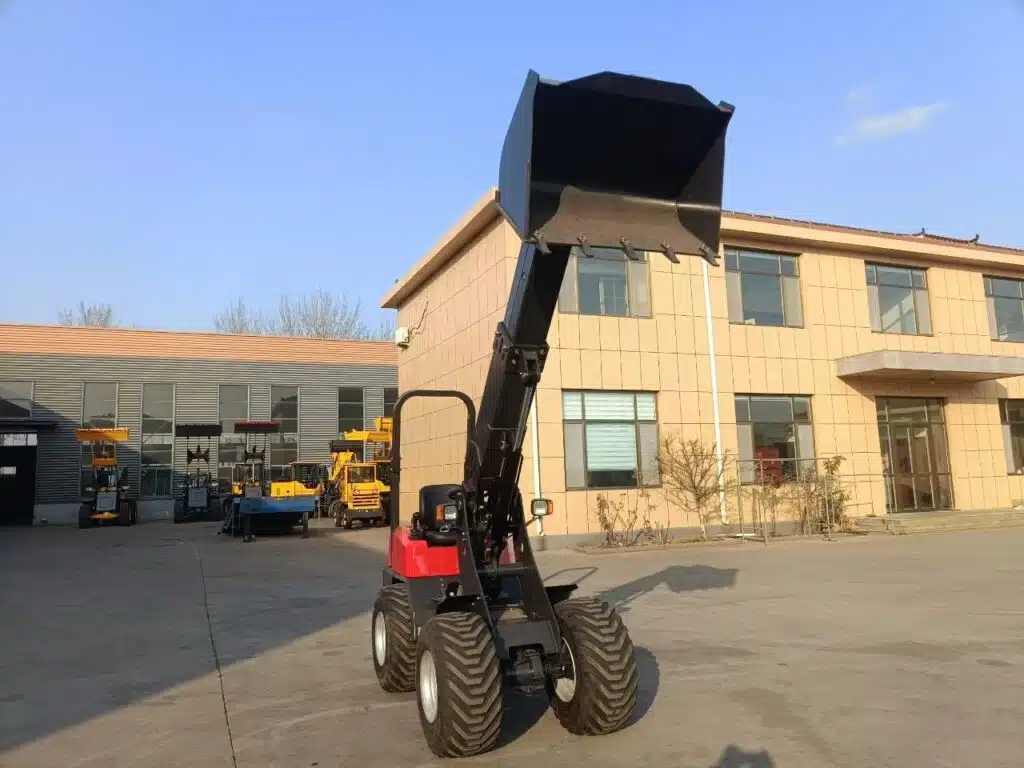
A Chinese small telescopic loader can be a smart choice for construction sites that need compact size, flexible reach, and useful lifting ability. It can move pallets, load materials, clean sites, and reduce manual handling.
But safe and successful use depends on more than price or maximum lifting capacity.
The buyer must understand the load chart, check stability, choose proper attachments, and match the machine to real site conditions. A telescopic boom gives more reach, but it also changes balance. The farther the load moves away from the machine, the more carefully the operator must work.
For construction buyers, the safest decision is not always the biggest machine or the cheapest machine. The safest decision is the machine that matches daily load weight, lifting height, forward reach, ground condition, transport needs, and operator skill.
A reliable supplier should explain these points clearly before the sale. Good communication, spare parts support, export packaging, and realistic technical data are all part of long-term value.
When buyers look beyond surface appearance and focus on invisible reliability, they are more likely to choose a small telescopic loader that works safely, lasts longer, and brings real value to the construction site.