
1. Who This Guide Is For
This guide is written for first-time importers of construction or agricultural machinery, especially:
- Equipment distributors and dealers
- Rental companies expanding their fleet
- Farm and construction business owners buying directly
- Buyers who understand sales but are not technical experts
If the goal is to buy one or several small telescopic loaders from China using DDP, without getting lost in shipping, customs, or paperwork, this guide is for you.
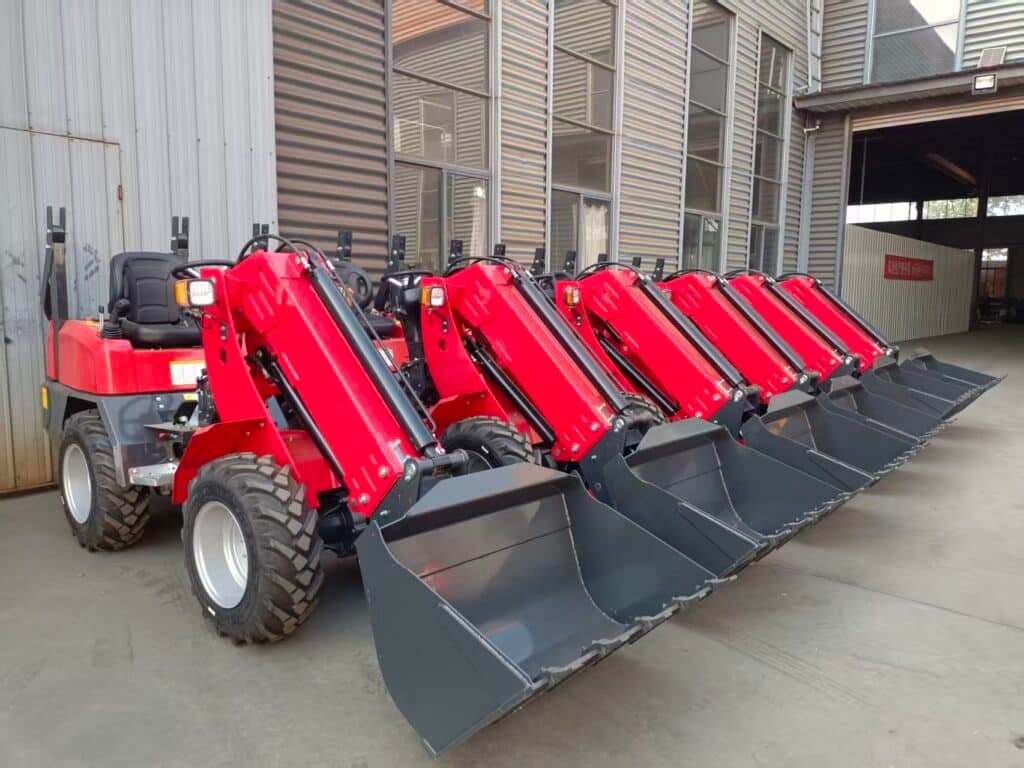
2. What Is a Small Telescopic Loader (In Plain English)
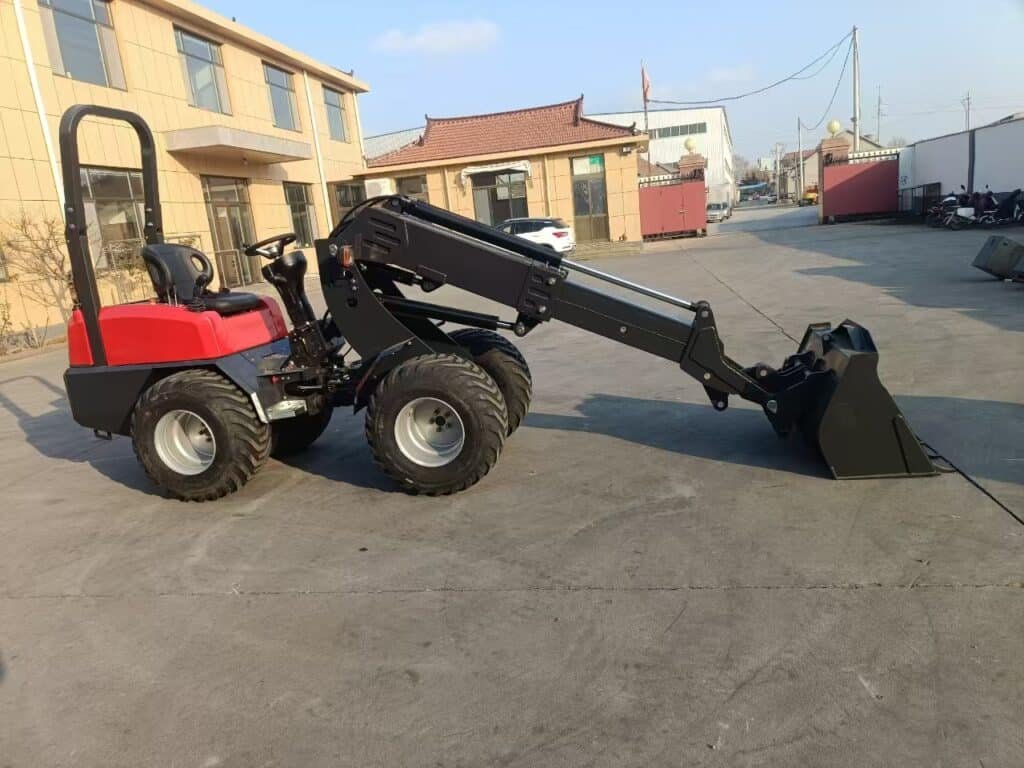
A small telescopic loader is basically:
- A compact loader
- With a telescopic boom
- That can lift higher and reach farther than a normal skid steer
People use it for:
- Farms (bales, feed, pallets)
- Construction sites (materials, bricks, tools)
- Warehouses and yards
- Landscaping and municipal work
Think of it as a Swiss Army knife: small body, long reach, very flexible.
3. Why Many First-Time Buyers Choose China
Most first-time importers choose China for three simple reasons:
- Price-to-performance ratio
You get solid lifting capacity and basic hydraulics without luxury pricing. - Mature supply chain
Engines, axles, hydraulics, steel – all local, all stable. - Customization flexibility
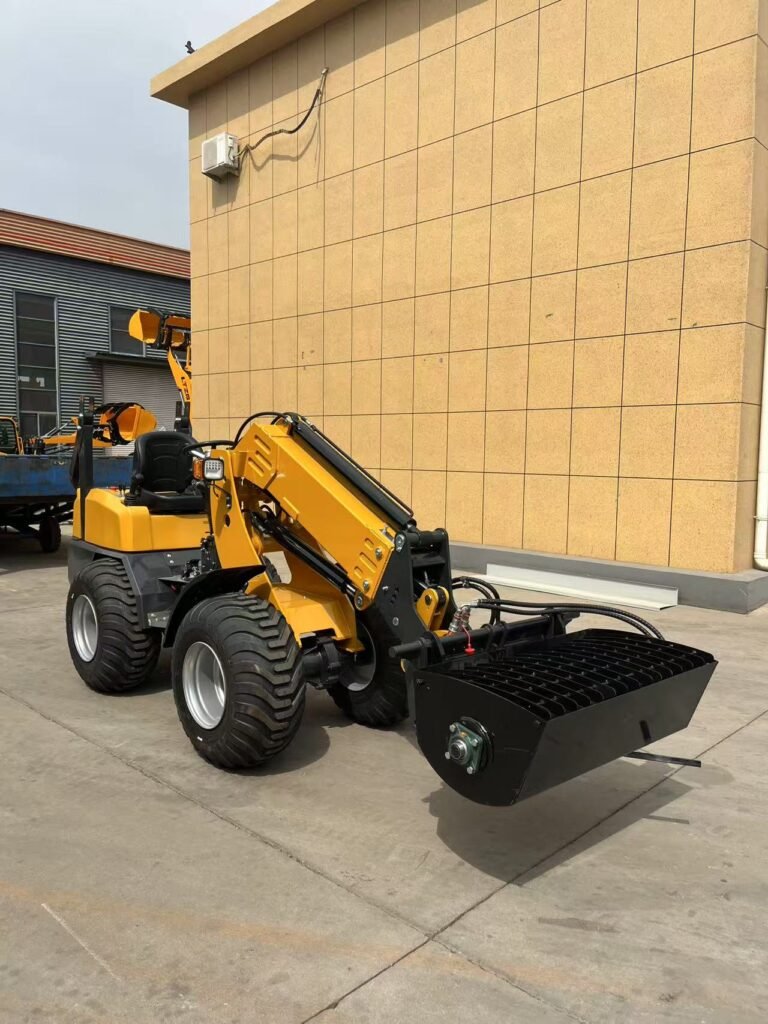
Paint color, decals, attachments, even control layouts can be adjusted.
The key is not choosing the cheapest offer, but choosing a factory that understands export responsibility, especially under DDP.
4. The Real Meaning of DDP (And Why It Matters)
DDP = Delivered Duty Paid
In simple words:
The machine arrives at your door.
Customs cleared.
Duties paid.
No surprise calls from brokers.
For a first-time importer, DDP removes 80% of the stress.
But here’s the truth many sellers won’t say:
- DDP only works if the factory really knows how to do it
- A bad DDP deal is worse than FOB
5. DDP vs FOB vs CIF – Simple Comparison
| Term | Who Handles Shipping | Who Clears Customs | Risk Level (Beginner) |
|---|---|---|---|
| FOB | Buyer | Buyer | High |
| CIF | Seller (to port) | Buyer | Medium |
| DDP | Seller | Seller | Low |
For first-time buyers, DDP is usually the safest option, even if the price looks higher on paper.
6. Step-by-Step: How a DDP Purchase Actually Works
Here’s how a real DDP order should flow:
- Buyer confirms machine specs
- Factory issues DDP quotation (with destination address)
- Contract confirms “DDP – Delivered Duty Paid”
- Buyer pays deposit
- Machine goes into production
- Factory books shipping, export clearance, import clearance
- Machine arrives at buyer’s location
- Buyer inspects and starts using it
If a seller cannot explain steps 5–7 clearly, that’s a warning sign.
7. What’s Included in a Proper DDP Quote (And What Is Not)
A real DDP quote should include:
- Machine price
- Export packing
- Ocean freight
- Import customs clearance
- Import duties & VAT (or equivalent)
- Local delivery to final address
What it usually does NOT include:
- Local unloading (forklift or crane)
- Registration for road use (if required)
- Optional attachments added later
Always ask for a DDP scope list, not just a price.
8. Certifications: What You Really Need (And What You Don’t)
For most markets:
- CE – Mandatory for Europe
- EPA / Stage V / Euro V engine compliance – Market dependent
- Noise & safety labels – Often included with CE
What first-time buyers often worry about:
- “Is the CE real?”
- “Will customs reject it?”
A reliable factory can:
- Provide CE documents
- Match serial numbers
- Show previous shipments to the same market
If a supplier avoids this topic or gives unclear scans, stop early.

9. Quality Concerns First-Time Importers Always Have
Common worries:
- “Will it break after 6 months?”
- “Are the hydraulics weak?”
- “Is the steel too thin?”
These concerns are valid.
The reality:
- Most problems don’t come from design
- They come from assembly shortcuts and component substitutions
That’s why factory process matters more than brochure specs.
10. How Factories Control Quality (What Happens on the Line)
In a stable factory environment, a small telescopic loader goes through:
- Frame welding with fixed jigs
- Boom stress testing before painting
- Hydraulic pressure testing
- Engine run-in (hot test)
- Final inspection before packing
Factories like Nicosail, with multiple production lines and long-term export focus, usually follow repeatable processes, not “order-by-order improvisation”.
That consistency is what keeps machines running after the warranty ends.
11. Customization: Paint, Logo, Specs – What’s Easy and What’s Risky
Easy and safe:
- Color change
- Logo decals
- Standard attachments
Medium risk:
- Control layout changes
- Tire brand changes
High risk for first-time buyers:
- Major hydraulic redesign
- Non-standard engines
- Extreme cost-down requests
A good factory will push back politely if a request risks reliability.
12. Lead Time & Shipping: Avoiding the Peak Season Trap
Typical timeline:
- Production: 25–40 days
- Sea shipping: 30–45 days
- Clearance & delivery: 7–14 days
Peak seasons:
- March–May
- September–November
First-time buyers should:
- Order earlier than planned
- Lock shipping early
- Avoid “urgent” orders before busy seasons
DDP doesn’t mean “instant”.
13. Payment Methods That Make Sense for First-Time Buyers
Common structures:
- 30% deposit + 70% before shipment
- Trade assurance (case by case)
- Bank transfer (most common)
Red flags:
- 100% upfront
- Personal accounts
- Pressure tactics
A stable factory focuses on long-term cooperation, not one deal.
14. Common DDP Traps and How to Avoid Them
Trap 1: “DDP but buyer pays VAT on arrival”
→ Clarify all taxes included
Trap 2: Fake local agent handling customs
→ Ask who the importer of record is
Trap 3: Ultra-low DDP price
→ Usually means shortcuts later
DDP should feel boring and predictable, not exciting.
15. Why Some Buyers Quietly Switch to Stable Factories Like Nicosail
Many buyers start with:
- One container
- One test machine
- One market
After a few cycles, they realize:
- Stable communication
- Honest timelines
- Clear DDP responsibility
Matter more than saving a few hundred dollars.
That’s why brands like Nicosail often grow through repeat buyers, not aggressive advertising.
16. Final Checklist Before Sending the Deposit
Before payment, confirm:
- Final specs sheet
- Certification copies
- DDP scope list
- Delivery address confirmation
- Production & shipping timeline
If all answers are clear, the risk is already low.
17. FAQs First-Time Importers Always Ask
Q1: Is DDP more expensive?
On paper, yes. In reality, it often saves money by avoiding mistakes.
Q2: Can one machine be shipped DDP?
Yes, but unit cost is higher than container loads.
Q3: What if customs delays happen?
With true DDP, that risk belongs to the seller.
Q4: Can spare parts be included?
Yes, and it’s strongly recommended for first-time buyers.
18. Final Summary: Buying with Confidence, Not Luck
Buying a small telescopic loader from China with DDP is not risky by default.
It only becomes risky when:
- The buyer doesn’t understand the process
- The seller doesn’t control the details
For first-time importers, the goal is simple:
- Reduce unknowns
- Work with factories, not traders
- Choose predictable over cheap
When done right, DDP turns international buying into a local-like experience—and that’s exactly how first-time importers succeed.